I felt compelled to watch Obama's "Prescriptions for America" meeting the other night (transcript available here), where he talked about America's health care system and what he wants to change about it. I was curious about what he was going to say, especially after his speech to the AMA, where he said he would not put caps on malpractice rewards. For this post, I think I'll focus on the things that I didn't agree with during his meeting, and I'll leave the things that I agreed with for another time.
One of the first things mentioned during the introduction to the program was that Obama supports a health care system that resembles today's medicare, where the government handles the financing but patients still have the freedom to choose their doctors and hospitals. Now, don't get me wrong, I like the idea of universal health care. I don't mind government involvement at all, especially if it can get care for those millions of Americans that can't afford medical treatment. Like it or not, however, there is some benefit that insurance companies provide: they spread out patients to various providers, and they make people stick with their choices. People have a few doctors to choose from on their plan, and because of this they have to stick with their doctor. You might be thinking that this is horrible--what if you have a doctor you absolutely hate? Well, the good news is that you can usually switch a couple times until you find one you like. When we eventually get universal healthcare, there are going to be 50 million or so people looking for a primary care provider to call their own. The health care system will be much more stressed, and I feel that we need at least a few ways to organize the people entering the system, rather than allowing for a blind clusterfuck to occur. I already thought that primary care physicians would be specializing in the future, to where there would be divisions in primary care based on age, disease type, or even gender. This may provide the necessary stabilization to the program. Who knows. There is also something to be said about establishing a relationship with your patients, something that frequent doctor-shopping does not allow. We have to consider if too much of a good thing (freedom to choose a health care provider) is a bad thing in this situation, especially with such a large population entering the system.
There was also some discussion on private vs. public health insurance, but I think that a lot of people are missing the point. A lot of people believe that public health insurance will, in itself, lower costs for everyone. It's the simple fact that we have insurance for health care which is driving up costs. Looking strictly at costs, it won't matter what kind we have. A simple car insurance analogy illustrates this pretty well.
A while back, I was in a small car accident with an emo teenage girl bitch, probably talking to her friends on the phone about how her parents hate her, her boyfriend dumped her again, or someone left a nasty message on her myspace (I might be bitter). Anyway, she hit my stationary car in a parking lot while talking on her phone, causing a surprisingly significant amount of damage to my back bumper. I went to the repair shop, where the first words out of their mouths were "is her insurance paying for it?" When I said yes, they instantly put on a big smile, and we walked out to the car to see what the damage was. You would be amazed what these guys said needed to be fixed, all because her insurance was paying for it. They pretty much wanted to replace (or order the parts to replace) the entire back end of the car, when they obviously didn't have to. The mechanic even said that, if I was paying for the repair myself, I would be paying only $700. But the bill to her insurance company was $3400. In turn, this girl's rates are going to go up (ha! fuck her...sorry, I'm still bitter), and she'll be paying a lot more for any other accidents she inevitably gets into. Guess what? The same thing happens with health insurance. *Gasp*
Though it isn't as obvious in health care, and there are many more checks to make sure this doesn't happen...it does. In some instances, it is even encouraged. A skilled doc can tell when his patients have pneumonia when they walk through the door. They have an unmistakable cough, and their histories and physical exams confirm the diagnosis. Docs really don't need x-rays to diagnose it, but they have to. They're required to. By the insurance companies, no less. Otherwise, they won't pay the doc for the patient's treatment. Because they weren't there to examine the patient, the insurance companies need visual confirmation of the disease. So the docs get paid for the x-rays and the treatment, fucking over the patient in the process (because their rates may or may not go up, but they can still get points on their record for that x-ray) and wasting money. That's why health care costs so much. Will public health insurance fix the problem? Maybe, but why would it? Docs will still have to answer to the insurance companies, so "covering their asses" with needless procedures will still be the norm. Insurance is insurance...and it sucks.
So why do docs have to "cover their asses?" Well, Mr. Obama, it's because the pointy stick of malpractice is always about to ram them in the ass. It's why docs pay over $100,000/year in malpractice insurance (which, based on the previous paragraph, also sucks). High malpractice claims do cost the healthcare system money, and they cost patients money. Malpractice is one of the main reasons why costs are so high (and why docs are often grumpy). Fuckin' a, Obama, fuckin' a.
One of the last things I wanted to talk about was Obama's statement that more people need to be encouraged to enter medicine, especially family medicine, through loan forgiveness etc., etc. I hope Obama gets to the realization that the problem isn't that people don't want to go into medicine. The problem is that there are not enough medical schools and thus not enough people graduating from medical school. If all of these students went into primary care, we would probably still not have enough docs for the millions of people about to enter the system. I have dozens of friends who didn't get into medical school for one reason or another, but I know they'll be excellent doctors, just by knowing their study habits and their desire to help people. More than likely, they'll just apply and get in to medical school next year or the following year. It's not like we weed out everyone who doesn't get into medical school...we just delay their entering if they don't get in (40,000 people every year don't get into medical school--20,000 do. In the next year, over half of those who do not get in will apply again, and the cycle continues). It's been proven that students only need a 20 on the MCAT (out of 45) and a GPA of 3.0 to do well in med school. There aren't many people applying who don't get above these scores. Let's reconsider how we educate our physicians, and maybe a few pieces of the puzzle will naturally fall into place.
Hopefully I've shown a bit of my stance on national health care in this post--I think it's important to consider all of these things in the establishment of a new system. I'll probably end up doing more about this in the future, especially as more ideas get tossed around in D.C. about the topic.
Jim
Sunday, June 28, 2009

Friday, June 26, 2009
Political Nihilism
It's been nearly two weeks since I received a $184,178 piece of paper declaring that I have some negligible amount of expertise in the nebulously defined field of "Public Policy Studies." The most common question about this area--one I freely admit to not having a complete answer to--is straightforward: what the hell is public policy? The very close runner-up is probably "is that like political science?" I'm going to indulge myself by ruminating on these questions for a bit.
To understand what public policy is, it is necessary to tackle politics first. Let's consider two kinds of thinkers: Politicians and Utopians. The difference between the two is the difference between what is and what should be. The Politician has the unenviable task of facing the harsh realities of today. Politics is invariably ugly and unpleasant because it is the mirror society holds up to itself. The Politician is responsible for representing the views of his constituents--sometimes ugly, sometimes irresponsible--well enough to get re-elected. The Utopian is tasked with envisioning the Good Society and outlining its structure. Unconcerned with constraints, the Utopian is preoccupied by possibilities, meticulously constructing elegant solutions to intractable social problems. Rough caricatures that these labels may be, they do an adequate job of making the distinction clear.
Public policy, in an ideal world, is the bridge between the world of the Politician and the world of the Utopian. Not quite myopic enough to appease only the Politician and not quite bold enough to satisfy the Utopian, public policy is a tiptoe--perhaps a half-step in extraordinary times--toward a goal envisioned by the Utopians. Thus public policy is borne of a collaboration between the Politicians and the Utopians of the world. It is a program or course of action--or inaction--to which the government commits itself with some purpose in mind.
Of course, one likes to think that few pure Politicians or Utopians exist in the world. We prefer to believe that our elected officials serve with some purpose and some vision and that those academics, policy analysts or advocates, and long-shot candidates who help to shape our discourse are not completely divorced from reality. Übercynics and ivory tower buffoons would make strange bedfellows indeed. But only the shrewdest of operators can successfully navigate both worlds to produce good policy.
The question of what constitutes "good" policy is, of course, the great unresolved social question that occupies us every two years. "Good policy" is often--erroneously, I believe--assumed to lie in the purview of the Utopian; the Politician merely mucks up the implementation of the Utopian's pristine plans. "We know what works but the political system will never let us do it," a friend majoring in political science once complained to me. The fatal flaw in this logic, of course, is that it ignores the purpose of a representative democracy. The questions at the heart of public policy are philosophical: what is important to us? How should the world be? What is the role of government in society? And so on. The Utopian assumes certain answers to these questions and proceeds to prescribe antidotes to the problems he diagnoses in society.
Therein lies the paradox. As any public policy student can attest, identifying a problem is the first step toward developing a policy solution. But problem definition is an inherently political process: there are no "right" answers, only consensus answers. And we have elected not to leave the decision-making to a select group of Utopian oligarchs. Instead, we are all afforded a say in making the value judgments underpinning the public policy process: we get to elect representatives of our views. This is why the idealistic view of public policy-making as a strict matter of quasi-scientific problem-solving best left to the Utopians is untenable. This view forgets that the philosophical questions underlying every step of the policy process from problem definition to the formulation and implementation of solutions can be answered only by the body politic. We can be idealists or democrats but not both.
But once we accept--not grudgingly but enthusiastically--the key role the political process must play things become very murky. Complexities begin to pile on top of complexities. Elected officials are more than just representatives of districts; they are not simply vessels through which the will of a constituency is done. They lead and follow at the same time, they manipulate the masses as they are manipulated by the opinions and passions of their districts. Policy-making becomes more than just a contorted sort of problem-solving in which palatable solutions are developed to address problems identified by consensus. Solutions can be decoupled from problems; indeed, problems can be conjured to fit pre-existing solutions. The distinctions between "campaigning" and "governing" begin to blur and no longer can each be identified simply by noting whether it happens to be an even or an odd numbered year.
The noble vision of policy-making and governing fades into a less gratifying image: that of a game. A grave game with enormous consequences but a game nonetheless. The culprit, I suspect, is, in part, uncertainty. The dissolution of the Absolute--the Good Society toward which we strive--leaves us rudderless. We--the collective public--drift between political persuasions with the ebbs and flows of popular opinion often dictated by events seemingly beyond our control. Compare the political climate of 1920 with that of 1932 or the prevailing political winds of 1980 with those of 2008. "Right" answers are elusive. Some people grasp onto an ideology that contains the philosophical precepts that offer a guide to formulating public policy (i.e. contain an implicit picture of what the Good Society will look like), while others prefer a more pragmatic and less ideologically-anchored approach.
A participant in the policy process who becomes unmoored from ideological preferences and personal passions finds himself in a dire situation. The loss of faith leaves him with only the cold embrace of cynicism. He can be little more than a "hired gun," choosing a side and playing to win by any means necessary. Politics and policy-making become solely about the acquisition of power or a simple love of the game. The notion of identifying desirable social goals and using policy to launch us in the direction of the Utopian's dream becomes quaint and, if anything, simply a tool in the political manipulator's arsenal. This sense of purposelessly drifting through the political landscape is what I'll call political nihilism (a usage of the phrase that differs a bit from what Wiki tells me is usual). It isn't any more endemic to society than is religious agnosticism but I suspect--as with religious agnostics--there are many adherents among us. However, this might be getting a little simplistic and less coherent so I'll stop for now. More to come, I think.
To understand what public policy is, it is necessary to tackle politics first. Let's consider two kinds of thinkers: Politicians and Utopians. The difference between the two is the difference between what is and what should be. The Politician has the unenviable task of facing the harsh realities of today. Politics is invariably ugly and unpleasant because it is the mirror society holds up to itself. The Politician is responsible for representing the views of his constituents--sometimes ugly, sometimes irresponsible--well enough to get re-elected. The Utopian is tasked with envisioning the Good Society and outlining its structure. Unconcerned with constraints, the Utopian is preoccupied by possibilities, meticulously constructing elegant solutions to intractable social problems. Rough caricatures that these labels may be, they do an adequate job of making the distinction clear.
Public policy, in an ideal world, is the bridge between the world of the Politician and the world of the Utopian. Not quite myopic enough to appease only the Politician and not quite bold enough to satisfy the Utopian, public policy is a tiptoe--perhaps a half-step in extraordinary times--toward a goal envisioned by the Utopians. Thus public policy is borne of a collaboration between the Politicians and the Utopians of the world. It is a program or course of action--or inaction--to which the government commits itself with some purpose in mind.
Of course, one likes to think that few pure Politicians or Utopians exist in the world. We prefer to believe that our elected officials serve with some purpose and some vision and that those academics, policy analysts or advocates, and long-shot candidates who help to shape our discourse are not completely divorced from reality. Übercynics and ivory tower buffoons would make strange bedfellows indeed. But only the shrewdest of operators can successfully navigate both worlds to produce good policy.
The question of what constitutes "good" policy is, of course, the great unresolved social question that occupies us every two years. "Good policy" is often--erroneously, I believe--assumed to lie in the purview of the Utopian; the Politician merely mucks up the implementation of the Utopian's pristine plans. "We know what works but the political system will never let us do it," a friend majoring in political science once complained to me. The fatal flaw in this logic, of course, is that it ignores the purpose of a representative democracy. The questions at the heart of public policy are philosophical: what is important to us? How should the world be? What is the role of government in society? And so on. The Utopian assumes certain answers to these questions and proceeds to prescribe antidotes to the problems he diagnoses in society.
Therein lies the paradox. As any public policy student can attest, identifying a problem is the first step toward developing a policy solution. But problem definition is an inherently political process: there are no "right" answers, only consensus answers. And we have elected not to leave the decision-making to a select group of Utopian oligarchs. Instead, we are all afforded a say in making the value judgments underpinning the public policy process: we get to elect representatives of our views. This is why the idealistic view of public policy-making as a strict matter of quasi-scientific problem-solving best left to the Utopians is untenable. This view forgets that the philosophical questions underlying every step of the policy process from problem definition to the formulation and implementation of solutions can be answered only by the body politic. We can be idealists or democrats but not both.
But once we accept--not grudgingly but enthusiastically--the key role the political process must play things become very murky. Complexities begin to pile on top of complexities. Elected officials are more than just representatives of districts; they are not simply vessels through which the will of a constituency is done. They lead and follow at the same time, they manipulate the masses as they are manipulated by the opinions and passions of their districts. Policy-making becomes more than just a contorted sort of problem-solving in which palatable solutions are developed to address problems identified by consensus. Solutions can be decoupled from problems; indeed, problems can be conjured to fit pre-existing solutions. The distinctions between "campaigning" and "governing" begin to blur and no longer can each be identified simply by noting whether it happens to be an even or an odd numbered year.
The noble vision of policy-making and governing fades into a less gratifying image: that of a game. A grave game with enormous consequences but a game nonetheless. The culprit, I suspect, is, in part, uncertainty. The dissolution of the Absolute--the Good Society toward which we strive--leaves us rudderless. We--the collective public--drift between political persuasions with the ebbs and flows of popular opinion often dictated by events seemingly beyond our control. Compare the political climate of 1920 with that of 1932 or the prevailing political winds of 1980 with those of 2008. "Right" answers are elusive. Some people grasp onto an ideology that contains the philosophical precepts that offer a guide to formulating public policy (i.e. contain an implicit picture of what the Good Society will look like), while others prefer a more pragmatic and less ideologically-anchored approach.
A participant in the policy process who becomes unmoored from ideological preferences and personal passions finds himself in a dire situation. The loss of faith leaves him with only the cold embrace of cynicism. He can be little more than a "hired gun," choosing a side and playing to win by any means necessary. Politics and policy-making become solely about the acquisition of power or a simple love of the game. The notion of identifying desirable social goals and using policy to launch us in the direction of the Utopian's dream becomes quaint and, if anything, simply a tool in the political manipulator's arsenal. This sense of purposelessly drifting through the political landscape is what I'll call political nihilism (a usage of the phrase that differs a bit from what Wiki tells me is usual). It isn't any more endemic to society than is religious agnosticism but I suspect--as with religious agnostics--there are many adherents among us. However, this might be getting a little simplistic and less coherent so I'll stop for now. More to come, I think.
Sunday, January 4, 2009
Teej's college rant
My apologies for the (extremely) late post. I can't really comment about parties here at Case, just because my school is actually known for hardly having any parties at all. Those that we do have are hosted by the frats, which means they're either recruitment events or ridiculous wastes of time, mainly because a couple hundred people are all trying to maneuver in a small living room. So I don't think we have Teej's problem of apathetic students. Our problem is exactly opposite in nature--a lot of people don't socialize at all. I'd go as far to say that they worry too much about school. Even though our workload is insane, there's no reason/need to spend so much time staring at textbooks (unless you're a BME...you'll probably find a new major soon anyway). There's a reason why 90%, and most of the time 80 or 85% for the more advanced classes, is the minimum for an A. People who study all the time and get 100+% get the same grade in the end as someone who balances their life and gets a 92%. Moral of the story--get out of the fucking library once in a while.
A lot of people at Case are continuing to grad school to be a lawyer, doctor, or some other professional. They feel that spending all day/night studying is the only way they'll ever get into grad school, and they also think that hitting the books as much as possible in undergrad will somehow make things easier when grad school rolls around. I'd actually argue the opposite. Who wants a doctor so socially inept that they can't properly communicate with you before a crucial operation? What about a lawyer who has a hard time collaborating with clients and collegues? They might know every court case by memory, but would that make them the best lawyer in the world? Definitely not. I'd also argue that undergrad only has a few benefits for grad school. The subject matter isn't really one of them. Sure, you get the basics that you need for success, but it's just idiotic to study so much that you memorized the Krebs cycle, the names of all the compounds involved, the enzymes, and the three dimensional structures of the compounds. In med school that's called "an introduction to aerobic respiration." In undergrad, that's called overkill. We should be learning how to manage our time, learn basic material, and in my opinion learn about a large range of topics, not just a select few--especially if you're going on to higher education. Med students who spent every waking hour studying in undergrad have to not only relearn most of their textbook knowledge (I guarantee most of the stuff they've spent so much time trying to learn will evaporate before they see it again in med school), but they also have to figure out how to socialize with other docs and students. In many parts of the world, like India, they skip "undergrad" completely, going on to med school or whatever right out of high school. I'd also argue that Indian doctors are just as competent, if not more so (due to more time in clinical practice) than their American counterparts. Maybe I'm just anti-American.
In agreement with Teej, I guess I'd also like people to take a step back to consider what they're currently focusing on is really beneficial for them, and more importantly (in my view), going to help others in the future. Studying incessantly and knowing everything might turn you into a Ken Jennings, or it might also end up turning you into a horrible doctor, lawyer, teacher, etc.
A lot of people at Case are continuing to grad school to be a lawyer, doctor, or some other professional. They feel that spending all day/night studying is the only way they'll ever get into grad school, and they also think that hitting the books as much as possible in undergrad will somehow make things easier when grad school rolls around. I'd actually argue the opposite. Who wants a doctor so socially inept that they can't properly communicate with you before a crucial operation? What about a lawyer who has a hard time collaborating with clients and collegues? They might know every court case by memory, but would that make them the best lawyer in the world? Definitely not. I'd also argue that undergrad only has a few benefits for grad school. The subject matter isn't really one of them. Sure, you get the basics that you need for success, but it's just idiotic to study so much that you memorized the Krebs cycle, the names of all the compounds involved, the enzymes, and the three dimensional structures of the compounds. In med school that's called "an introduction to aerobic respiration." In undergrad, that's called overkill. We should be learning how to manage our time, learn basic material, and in my opinion learn about a large range of topics, not just a select few--especially if you're going on to higher education. Med students who spent every waking hour studying in undergrad have to not only relearn most of their textbook knowledge (I guarantee most of the stuff they've spent so much time trying to learn will evaporate before they see it again in med school), but they also have to figure out how to socialize with other docs and students. In many parts of the world, like India, they skip "undergrad" completely, going on to med school or whatever right out of high school. I'd also argue that Indian doctors are just as competent, if not more so (due to more time in clinical practice) than their American counterparts. Maybe I'm just anti-American.
In agreement with Teej, I guess I'd also like people to take a step back to consider what they're currently focusing on is really beneficial for them, and more importantly (in my view), going to help others in the future. Studying incessantly and knowing everything might turn you into a Ken Jennings, or it might also end up turning you into a horrible doctor, lawyer, teacher, etc.
Tuesday, December 16, 2008
I like this
The acoustic is only half as long as the regular one but sounds a thousand times better.
Wednesday, December 3, 2008
elephants beware
Logitech has made a billion mice. It's only a matter of time now until they kill off all of the elephants and take over the world.

And so, I propose a toast: here's to you Logitech, to you and your micey minions.
Monday, December 1, 2008
I agree with TJ. I too have had a sub-par college experience, er, thus far.
Barkeep? Another round, please.
Here’s my beef with college: I went in thinking it was going to be extremely hard, the best 4 years of my life, and the first time that I actually wanted to go to class (being the nerd that I am). Not so. There’s nothing special about UC. It’s high school version 2.0. The students here (from what I can tell) are not set on learning cool shit and abolishing ignorance; they are focused on a 4.0 GPA and getting out ASAP. What about the study groups? You know, the 2-5 friends/classmates who spend long hours in some dingy room with flickering lights in the library writing equation after equation, problem after problem on the white board (better yet a room so dingy it still has chalkboards). All because the professor is trying to make the class impossible. I thought college was a sort of game between instructor and student, a game in which the student was graded on how well he/she solved the challenges given to him/her. I was thinking something more about learning and less about GPAs.
GPAs are silly really. Sure it gives some indication to the blood, sweat and tears put forth by the student, but it’s highly inaccurate. Is it harder to get a 4.0 in Engineering or Business? Engineers aren’t supposed to get A’s in their classes. If they are, they’re under-challenged by a long shot. The grades are supposed to be tied to the classes, not averaged. What if I were to graduate with a 3.2 but got C’s in every chemistry course I took? I wouldn’t be much of a chemical engineer now would I?
I thought I would care about my GPA. But then I realized that it wasn’t based on how well you knew what you were doing, it was based on whether or not you did the homework. At that point, what’s the point? 10 years down the road that 4.0 is going to mean squat. Those who will succeed will be the ones who learned a thing or two.
What about all the pranks? All the stuff that make the memories? The stuff that gets you into trouble but not kicked out of school?
http://upload.wikimedia.org/wikipedia/en/3/35/MIT_firetruck_hack_2006.JPG
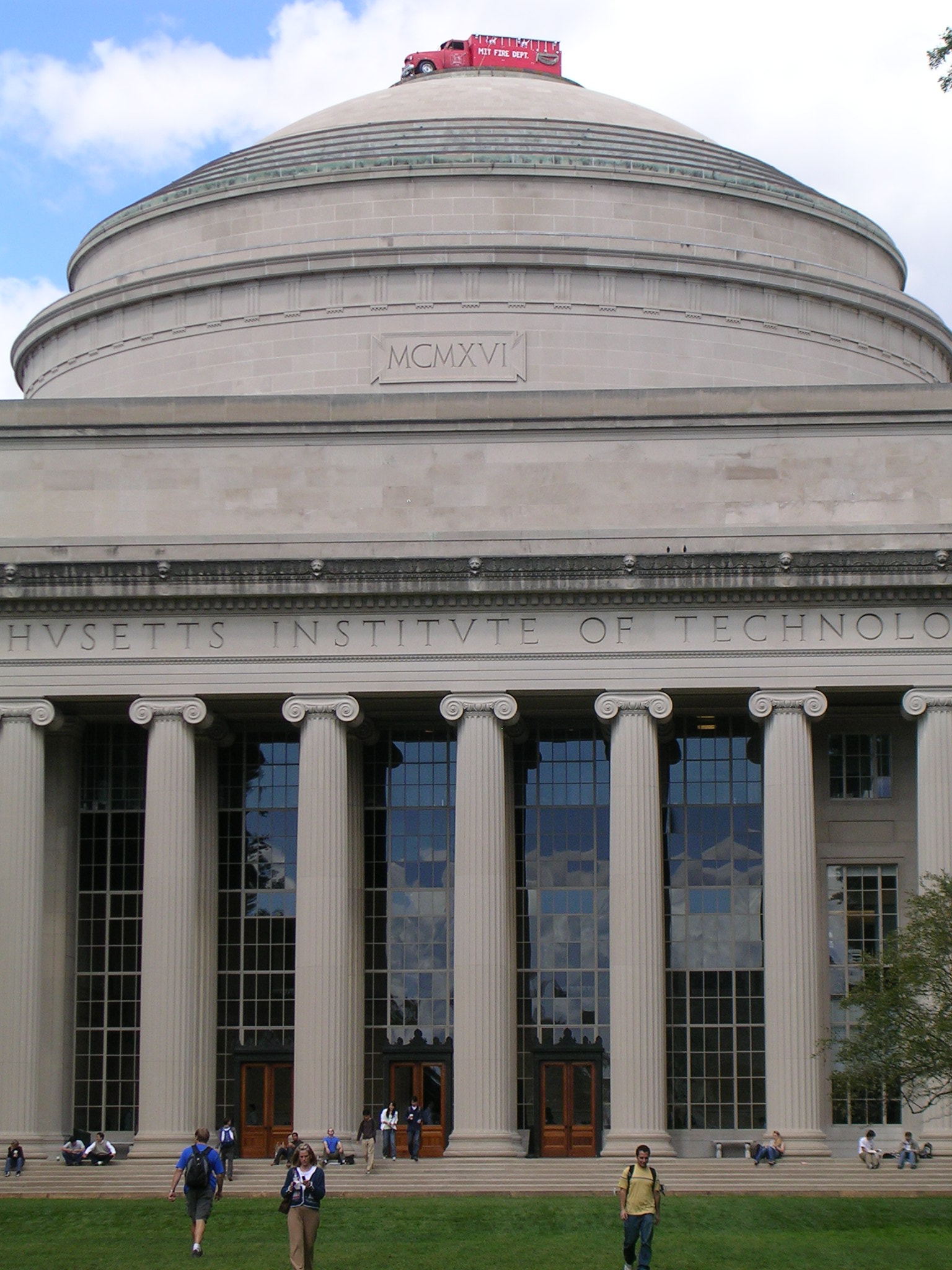
I’m sick and tired of students complaining about how they don’t know why they need this class or that one. Trust me, engineers need Differential Equations and Principles of Momentum Transport etc. Nobody said this was going to be easy. It’s not supposed to be. Some people are going to drop out of college if not then out of their major. That’s supposed to be a form of natural selection so that by the time everyone gets their diplomas, they get what they deserved/earned. Too many students are pushed through all levels of school. It provides no benefit to society, in fact, it just makes us stupider as a whole. Too many things get dumbed down and simplified for the sole reason of leveling the playing field and allowing everyone an equal chance. I don’t know about you, but I don’t want everyone to be an engineer. Engineers are supposed to be the best and the brightest and such.
In doing so, kids like me missed out on the best 4 years of our lives. We miss out on the person-to-person learning experience of professor to student that I thought college was all about. 3rd year courses should not contain 30+ students (especially when there’s only about 60 or so in your class). Math and science can’t be effectively taught in a lecture format. These sorts of things need interaction. Not everyone learns on their own.
In short, I want to learn dammit! That's what I shovel hundreds of thousands of dollars out for. And I want all those who don't care about learning, who don't care what they major in, or who don't even want to be here, to just get out of my way or join me.
As for Halloween, well…
I went as Alex from A Clockwork Orange. The majority of people who got who I was were my age or older. All the young whipper snappers didn’t understand. Some didn’t even know who Stanley Kubrick was. Mind you, it was pretty obvious even if you’ve only just heard of the film.
I saw plenty of turtles, though no bloodthirsty Marios with pistols and syphilis.
Sunday, November 30, 2008
Halloween... A month later
I originally planned to post this the day after Halloween, but school, finals, and plain ol' forgetting prevented me until now. Let me start by putting my bitter first-post into a little context. The Halloween party at Ohio University was absolutely horrible this year, or at least my experience of it. Friday, before the actual block party, I nearly got into a fist fight at my favorite bar with two racist tools who actually threatened to kill me. Then that Saturday, during the actual party, I dressed up as the Cash Cab by putting a cardboard box around me, and it lasted all of 2 hours before a drunk woman fell in front of me and used my costume to pull herself back up. As a result, I apologize if the following sounds somewhat bitter.
It seems like over the past 20 or so years college has taken a dramatic turn for the worse. What used to require hard work and dedication now only requires money and the absolute minimum of an attendance record. Students in the past were expected to do well, while today most are expected to be sub-par and are even accommodated for it by professors and administration. What once was a path to the highest jobs in society has now become the most basic requirement for any decent job; and related to that, now grad school is expected for an ever increasing number of occupations. In the end, most people end up essentially buying their job.
As I walked home from the festivities with my broken costume and pissed off attitude, I suddenly saw that Halloween in Athens is a great analogy to college itself. Let me first go on the record by saying that I do enjoy drinking and partying in college, it's the people who attend college with (literally) no other goal or accomplishment in mind that I am against. I just want to clarify that I enjoy having "a good time" in many different ways; I'm not a straight-edge who thinks my version of fun is the only legitimate form. Back to the point, the first analogy I saw was in the amount of people at the block party. What began in 1974 with a few costumed students blocking the main street has become a planned event with tens of thousands of people from all over attending. Albeit this is an accomplishment, however it's fairly superficial. Through social pressures, people are now expected to attend and are even looked down upon (again, literally) if you decide not to. Some people are even ridiculed for choosing not to drink. Compare this to college itself: it began with just a few people, it has grown to a bloated size, and society treats you differently if you do not go (especially economically, but there does seem to be an air of social elitism against those who can not or choose not to attend). A few people I know (myself included) didn't even really care about going this year, but decided that since everyone else was...
A second analogy I saw was with the costumes themselves, which have grown progressively more generic each year. Every Halloween, there are more guys dressed as Mario, Luigi, or a Pirate (or how about a combination? I admit, a bloodthirsty Mario with two pistols and syphilis would be pretty unique), and more girls dressed as slutty nurses/maids/etc. What was once a forum for creativity is now a way for unconsciously proving just how much you fit the social mold, or alternatively just how apathetic to creativity you are. I honestly feel my Cash Cab idea was up in the top 5% for creativity, which is sad considering the hype of how unique this event is supposed to be, as well as the fact that I didn't even really want to go. Comparing this to college, how many people do you know went into psychology or business just because they had no idea what else to do? (No offense to psych and business majors, if you like it then go for it). And we all do poorly in classes at times, but way too many people are devoid of any creativity and simply get through every class without ever even attempting to think. Maybe my school is an extreme case, but at OU the resemblance regarding creativity is uncanny.
The last analogy, and there are more that I'm not mentioning to prevent this from becoming longer and preachier than Braveheart, is with those in control. The first few Halloweens at OU were spontaneous events created by the students themselves. Yet after a few years, the town itself began to take charge of the event, which originally was for the best considering the amount of people these days as well as the disruption the party causes. The problem arises in that the powers that be have attempted in the past (unsuccessfully, so far) to charge admittance fees to the block party. Again, I see the point: a lot of police have to be diverted to watch the party. But the suggested price, like college, is way too much. If you're attending from out of town, you're already paying 20 bucks to park for the weekend. Tack on the 5 to 10 bucks, which will inevitably go up over the years, and that's a fairly hefty price for a single night of walking around on a street. I know it doesn't seem like that much, but that's a huge profit considering the tens of thousands of people who attend. Plus, with the hundred or so students arrested and fined for underage drinking each year, the town is making a good deal of money back from what they're spending on security. I see college as a similar course of events. Originally, professionals gathered on their own accord to instruct and interact with other professionals. The state eventually entered with good intentions of regulating what was going on to prevent quacks and average Joe's from misteaching people. Then finally, the potential for profit became too much, and a good idea became a money-making scam.
I apologize for making my first post a lengthy, bitter attack on the university system. College still serves a purpose and for as many bad experiences I've had, there have been many great ones too. I don't mean to preach, I just always hope that the more people pointing out what's wrong with an institution, be it Halloween or college, the more other people might take note and begin to question themselves.
It seems like over the past 20 or so years college has taken a dramatic turn for the worse. What used to require hard work and dedication now only requires money and the absolute minimum of an attendance record. Students in the past were expected to do well, while today most are expected to be sub-par and are even accommodated for it by professors and administration. What once was a path to the highest jobs in society has now become the most basic requirement for any decent job; and related to that, now grad school is expected for an ever increasing number of occupations. In the end, most people end up essentially buying their job.
As I walked home from the festivities with my broken costume and pissed off attitude, I suddenly saw that Halloween in Athens is a great analogy to college itself. Let me first go on the record by saying that I do enjoy drinking and partying in college, it's the people who attend college with (literally) no other goal or accomplishment in mind that I am against. I just want to clarify that I enjoy having "a good time" in many different ways; I'm not a straight-edge who thinks my version of fun is the only legitimate form. Back to the point, the first analogy I saw was in the amount of people at the block party. What began in 1974 with a few costumed students blocking the main street has become a planned event with tens of thousands of people from all over attending. Albeit this is an accomplishment, however it's fairly superficial. Through social pressures, people are now expected to attend and are even looked down upon (again, literally) if you decide not to. Some people are even ridiculed for choosing not to drink. Compare this to college itself: it began with just a few people, it has grown to a bloated size, and society treats you differently if you do not go (especially economically, but there does seem to be an air of social elitism against those who can not or choose not to attend). A few people I know (myself included) didn't even really care about going this year, but decided that since everyone else was...
A second analogy I saw was with the costumes themselves, which have grown progressively more generic each year. Every Halloween, there are more guys dressed as Mario, Luigi, or a Pirate (or how about a combination? I admit, a bloodthirsty Mario with two pistols and syphilis would be pretty unique), and more girls dressed as slutty nurses/maids/etc. What was once a forum for creativity is now a way for unconsciously proving just how much you fit the social mold, or alternatively just how apathetic to creativity you are. I honestly feel my Cash Cab idea was up in the top 5% for creativity, which is sad considering the hype of how unique this event is supposed to be, as well as the fact that I didn't even really want to go. Comparing this to college, how many people do you know went into psychology or business just because they had no idea what else to do? (No offense to psych and business majors, if you like it then go for it). And we all do poorly in classes at times, but way too many people are devoid of any creativity and simply get through every class without ever even attempting to think. Maybe my school is an extreme case, but at OU the resemblance regarding creativity is uncanny.
The last analogy, and there are more that I'm not mentioning to prevent this from becoming longer and preachier than Braveheart, is with those in control. The first few Halloweens at OU were spontaneous events created by the students themselves. Yet after a few years, the town itself began to take charge of the event, which originally was for the best considering the amount of people these days as well as the disruption the party causes. The problem arises in that the powers that be have attempted in the past (unsuccessfully, so far) to charge admittance fees to the block party. Again, I see the point: a lot of police have to be diverted to watch the party. But the suggested price, like college, is way too much. If you're attending from out of town, you're already paying 20 bucks to park for the weekend. Tack on the 5 to 10 bucks, which will inevitably go up over the years, and that's a fairly hefty price for a single night of walking around on a street. I know it doesn't seem like that much, but that's a huge profit considering the tens of thousands of people who attend. Plus, with the hundred or so students arrested and fined for underage drinking each year, the town is making a good deal of money back from what they're spending on security. I see college as a similar course of events. Originally, professionals gathered on their own accord to instruct and interact with other professionals. The state eventually entered with good intentions of regulating what was going on to prevent quacks and average Joe's from misteaching people. Then finally, the potential for profit became too much, and a good idea became a money-making scam.
I apologize for making my first post a lengthy, bitter attack on the university system. College still serves a purpose and for as many bad experiences I've had, there have been many great ones too. I don't mean to preach, I just always hope that the more people pointing out what's wrong with an institution, be it Halloween or college, the more other people might take note and begin to question themselves.
Subscribe to:
Posts (Atom)